
Clear Skies On The Way To UNEA-6
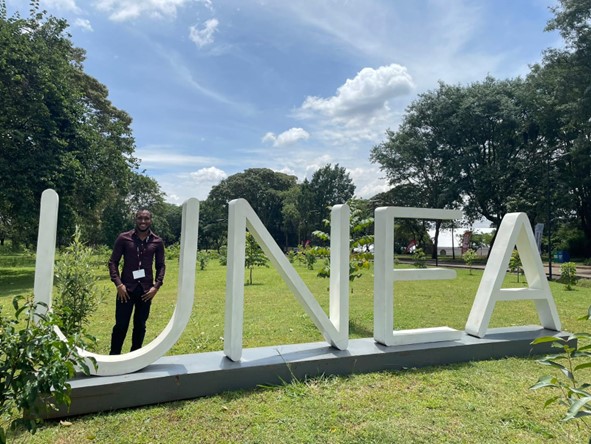
These past few weeks have passed in a blur and now that the dust has settled on the sixth meeting of the United Nations Environment Assembly (UNEA-6), I would love to share with you all my experience which could not have happened without the support of EcoVybz Environmental Creatives. For all of you reading, before I begin to tell you about my time in Nairobi, Kenya, I will explain the process of the UNEA. Membership to the UNEA is open to all countries worldwide. Currently, 133 countries have permanent representatives, similar to the United Nations Headquarters. However, non-accredited countries, like Trinidad and Tobago are still invited to participate. The Committee of Permanent Representatives convenes quarterly, while UNEA meetings occur biennially since 2012.
The Ending Of A Two Year Journey To UNEA
I was added to the Trinidad and Tobago delegation as a youth representative. My fellow delegate was Keima Gardiner, a waste management specialist within the Ministry of Planning and Development. Over the years, my involvement in these conferences has allowed me to connect with various diplomatic and official staff from Trinidad and Tobago, all of whom have championed and encouraged my participation in future meetings. This journey led me to Nairobi alongside Keima, where I had the opportunity to learn from her expertise in negotiations and Multilateral Environmental Agreements ( MEAs).
With nearly five years of engagement with UNEP under my belt, the thought of spending two weeks in Nairobi shoulder-deep in various negotiations, bilaterals, informals, informals-informals and informal-informal-informals (YES you read that correctly), never phased me. Having previously attended and participated in UNEA 5.2 in 2022 and multiple conferences over the past few years, I was well-prepared for the experience.

Touchdown At UNON: The Halls Of Environmental Change
The journey to Nairobi was long and arduous, requiring two connecting flights. As the plane landed at Jomo Kenyatta International Airport on the 16th of February, I eagerly looked forward to the events planned, ranging from the youth assembly to UNEA negotiations.
As I served on the steering committee for the Children and Youth Major Group (CYMG) to UNEP, as the Environmental Law Thematic Focal Point I played an active role in planning and executing various events during the Youth Assembly. UNEP graciously allowed CYMG to host the Youth Assembly in their Conference Room Halls, and stepping into those impressive rooms filled me with a sense of pride and destiny. Despite the limited number of Caribbean delegates from Jamaica and Guyana, reconnecting with old friends was heartwarming after years apart. Hundreds of young environmentalists spanning across the globe each sat at their respective tables. The Youth Assembly kicked off, with main segments featuring side events organized by members of the steering committee.
The Beginning Of The Youth Environmental Assembly

Day one of the Youth Assembly began with opening remarks from various members of the steering committee and representatives from the Kenyan Government. The main order of events was side events followed by consultations regarding the youth. As the first day concluded, a consultation on the 21 resolutions tabled at UNEA-6 occurred. I served as the Children and Youth contact point for two resolutions: “Solar Radiation Modification” and “Strengthening Regional Ministerial Forums”.
I know what you all are thinking! What is “Solar Radiation Modification” well I’ll tell you! Solar Radiation Modification (SRM) represents a deliberate intervention aimed at reducing the warming impact of anthropogenic climate change by reflecting sunlight back into space or facilitating the escape of thermal heat from the Earth. This strategy includes various approaches, with stratospheric aerosol injection (SAI) being the most researched, along with marine cloud brightening (MCB). While this is not a replacement for rampant and aggressive greenhouse gas emissions reductions, SRM could serve as a supplementary measure to temporarily limit climate change effects. The Intergovernmental Panel on Climate Change’s (IPCC) Sixth Assessment Report notes that while SRM can partially counteract the warming effects of increased greenhouse gasses, some intervention measures would also introduce significant regional and seasonal climate discrepancies due to the transboundary nature of SRM techniques.
The proposed draft resolution underscored the urgency of the climate crisis, concerns over the adverse effects of SRM, and the current lack of comprehensive multilateral oversight. It highlighted the challenges some countries, particularly those in the developing world, face in accessing science-based information on SRM technologies. As climate change is an inescapable reality for CARICOM, I felt it was my duty to understand the nature and techniques behind SRM to bridge that gap. Within the Global South, there is a knowledge gap in climate intervention techniques and this needs to be addressed underscoring the significance of this resolution to me.
This leads me to the two side events I organized, focusing on Environmental Law and Oceans, both held on the second day of the Youth Assembly. The Environmental Law Session featured Balakrishna Pisupati, head of UNEP’s policy branch, and Dr. Georgina Lloyd, head of UNEP’s Asia and Pacific Environmental Law Branch. I was extremely happy with the flow of the event as it sparked discussions on strengthening youth engagement in UNEP processes.
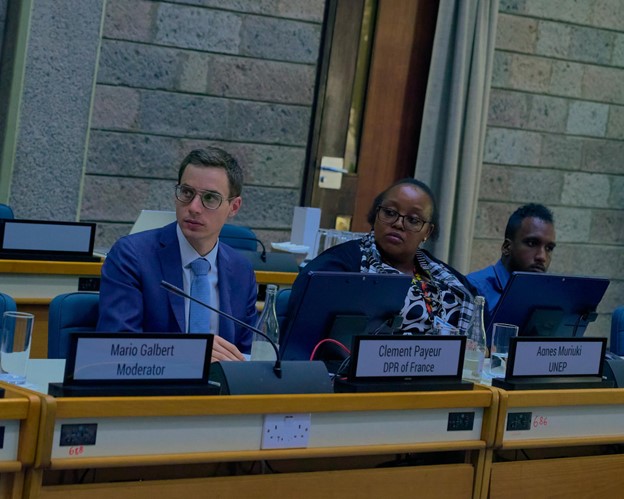
Next on the agenda was my oceans event which focused on the Regional Seas Convention (RSCs). For those unfamiliar, the RSCs is a series of 12 regional action-based programs for the conservation of bodies of water throughout the world. Within the Caribbean, the Cartagena Convention is the main body that represents the Regional Seas! Its thematic focus is on Land-Based Sources of Marine Pollution, Specially Protected Areas, and Wildlife and Oil-Spills. In retrospect, this focus gained heightened relevance to me due to a significant oil spill that occurred in Tobago shortly before I departed for Nairobi. The Cartagena Convention in my opinion is one of the best executed conventions globally due to its effective training initiatives. Our panel included Clement Payeur, The Deputy Permanent Representative of France, and Annes Muriuki, a youth representative of the Nairobi convention. France was specifically invited as they were the main sponsors of the Oceans resolution calling for more support by UNEP and member states to ratify existing treaties and agreements. As a Caribbean youth and an Early Career Ocean Professional (ECOP), I contributed to the panel by offering a Caribbean perspective and sharing my expertise on the issue. A pivotal moment for me during the youth assembly was my contribution to the “Global Youth Declaration on the Environment” where I authored a section on Ocean Impacts. This declaration was then presented to UNEP’s Executive Director, Inger Andersen, and is now widely available online, having been viewed by numerous country delegations.

OECPR Begins And Fierce Negotiations And Positions Begin To Form
Navigating through the sixth Open-Ended Meeting of the Committee of Permanent Representatives (OECPR-6) and UNEA-6, I braced myself for the intense proceedings. Many days seemed to blend into one continuous experience, particularly as negotiations for two of the most contentious resolutions often extended late into the night! During UNEA, various resolutions are “clustered” together based on the theme. I mainly followed Cluster A which focused on chemicals and waste and Cluster B which focused on nature-based solutions and halting biodiversity loss.

I had the pleasure of meeting and engaging with various CARICOM delegations, mainly Barbados, as they were chair of the Group of Latin America and the Caribbean (GRULAC) for UNEA. They warmly opened their arms to not just me but all other CARICOM youth attending UNEA, for which I was grateful. The negotiations were often lengthy and complex, stretching until midnight in some instances. Member states frequently proposed multiple revisions and text additions to steer the resolution in their preferred direction. To illustrate the intricacies of UNEA negotiations, member states spent two full days discussing whether to have the word “Ocean” or “Oceans” in the title of the resolution, thus is the nature of UNEA deliberations.
Additionally, I also had the opportunity to attend several side events covering topics like sargassum, Nature-based Solutions (NbS), and remediation. The virtual sargassum side event focused on its utilization in circular economic practices. I gained insights into global practices that transform sargassum into a net benefit for stakeholders, addressing the triple planetary crisis simultaneously. The NbS side event, hosted by Costa Rica and Nigeria, commenced with a High-Level segment discussing NbS’s significance in combating desertification and ocean challenges. The latter part centered on the co-chairs’ recommendations, exploring their potential to foster effective, inclusive, and sustainable NbS actions. Speakers shared their countries’ or organizations’ approaches to these recommendations and emphasized sustaining momentum for NbS beyond intergovernmental consultations. Moreover, the event highlighted mangroves as crucial blue carbon ecosystems offering both human and ecological advantages. I also attended a side event spotlighting the environmental impacts of war and heavy industry on pollution, biodiversity, and climate. Hosted by the Czech Republic, the event focused on mapping and mitigating these impacts. The exact aim was to show concrete examples of remediation of environmental damages, share expert experience, and demonstrate how data could be collected. Notably, the event detailed how the Ukraine war affected environmental parameters, such as reduced air pollution from industries and refineries ceasing operations.
Side-events On The Fringe Of UNEA
One very interesting aspect of UNEA is the various meetings and summits that run parallel to it such as the Sustainable Cities and Region Forum and the International Resource Panel. The major event however was the UN Science-Policy Business Forum (SPBF) which I attended. One of the most inspirational quotes I heard during the SPBF was,
“All governments should nominate a minister for future generations with the first task of eliminating excess, in line with the saying, the world has enough for everyone’s needs, but not everyone’s greed.” – Elizabeth Mrema, Deputy Executive Director, UNEP & TFND Co-Chair


From the outset, the forum was transformed into a collective moment of environmental hope. Speakers envisioned a world where trillions of dollars in net-negative financial flows are annually channeled into Nature-based Solutions (NbS) and “doing good.” They imagined artificial intelligence filling global knowledge gaps, and supporting contextualized solutions at the local level. Additionally, they foresaw technology mimicking natural processes to develop truly biodegradable materials.
The Curtains Close On UNEA And New Resolutions Are Birthing
As UNEA drew to a close, two decisions and 15/19 draft resolutions were adopted. Unfortunately, the proposed draft resolution on SRM was not adopted alongside Climate Justice, the definition of NbS and Circular Economy Transitions. These resolutions were very contentious, often taking up time and resulted in no agreement. On a brighter note, the resolutions on strengthening regional ministerial forums and governance on oceans and seas were passed! As an ECOP, I was particularly pleased with these outcomes as there were direct mentions of deep seabed mining (DSM) and the need for UNEP to strengthen the capacity of member states to properly assess DSM and its impacts before any mining takes place.
A Whirlwind Of Experiences And Memories
My last two days in Nairobi were an absolute whirlwind due to bilaterals with member states, donors and also the youths present. Among the last events I participated in was a side event focused on the implementation of the recently approved Global Framework on Chemicals (GFC) under the Strategic Approach to International Chemicals Management (SAICM) process. This event brought together stakeholders and government representatives. The sole youth panelist was Shannon Lisa, the Global Focal Point of the Chemicals and Waste Youth Platform. Keima Gardiner, representing Trinidad and Tobago, chaired the Committee of the Whole responsible for adopting the GFC at the Fifth Session of the International Conference on Chemicals Management.

Lastly, I co-hosted an event with SRM Youth Watch, Green Africa Youth Organization, Climate Change Action Africa and Kampala Climate Cafe. During the event, I moderated the session regarding the updates of SRM resolution as well as answered any question on its various techniques. Unfortunately, due to other responsibilities, I had to leave UNEA one day before it was scheduled to end. Nevertheless, the lessons, connections and memories that I gained will last a lifetime.

I am eternally grateful to EcoVybz and Khadija Stewart, for their support as well as the Ministry of Planning and Development for believing in me and allowing me to join Trinidad and Tobago’s delegation.
Written by Joshua Prentice
 ECOVYBZ