
Trials and Triumphs: Navigating the Unexpected Road to COP28
As the clock struck midnight, marking the eve of COP28, I found myself engulfed in a whirlwind of emotions as I received the confirmation that EcoVybz Environmental Creatives was going to fully sponsor my trip to Dubai. It was an opportunity of a lifetime, a chance to participate in one of the most significant gatherings on climate change. Excitement surged through my veins as I envisioned the bustling halls of the conference venue as a beacon of hope for global climate action.
However, little did I know that the journey ahead would be fraught with challenges and unexpected twists. Securing time off from school was just the beginning of my adventure. As the day of departure dawned, I eagerly made my way to the airport, brimming with anticipation for my first trip to Dubai. Yet fate had other plans. A seemingly endless line greeted me at the airport, testing my patience and resolve. Three gruelling hours later, I finally checked in, only to face yet another setback, my flight was delayed.
Hours spent stranded in the airport only heightened my anxiety, but eventually, I boarded the long-haul flight bound for Dubai. However, the realization that Air Canada had left my suitcase behind in Toronto quickly overshadowed any semblance of excitement. With my belongings stranded thousands of miles away, despair threatened to consume me.
Arriving in Dubai, I navigated through immigration with relative ease, but the absence of my luggage cast a shadow over my spirits. My mood darkened further as I contemplated attending the conference in the same clothes I had travelled in.
Immersed in the Heart of COP28
Despite the travel setbacks, the conference itself proved to be a whirlwind of activity. As a project coordinator with EcoVybz Environmental Creatives, my role at COP28 held immense significance as we commenced our Karibe Speak Project by interviewing a diverse group of Caribbean youth. Through Karibe Speak, we delved into the inspiring journeys of these resilient youth, hailing from Trinidad and Tobago, The Bahamas, Curaçao, Belize, Guyana, Jamaica, and many more Caribbean islands. From their narratives, we witnessed an aura of their determination to confront climate change as they showcased innovative solutions and community-led initiatives to inspire global action. It was my chance to contribute to the global dialogue on sustainability and to amplify the voices of Caribbean youth, who are often underrepresented in such forums.


Armed with my coveted Blue Zone badge, courtesy of Peace Boat, I delved into high-level discussions and immersed myself in the heart of COP28. From badge collection to attending side events hosted by renowned organizations such as the Caribbean Community Climate Change Center and Island Innovation, every moment was a testament to the magnitude of the challenges we face in combating climate change.
I had my first press conference, where I spoke about my voyage on the Peace Boat as part of the Youth for Sustainable Development Goals (SDGs) for the UN (United Nations) Ocean Decade program. Sailing from Panama to Guatemala and onward to Mexico, we participated in marine conservation, beach clean-ups, and sustainable practices. Additionally, I represented the Blue Planet Alliance as a global ambassador on several panels aimed at encouraging island nations to transition to 100% renewable energy by 2045. I also had the opportunity to meet with presidents, prime ministers, and ministers to advocate for sustainable initiatives and to network for potential collaborations.


Youth and Access to High-Level Events
However, one significant challenge I encountered was the limitation of having the Blue Zone badge for only one week. This systemic issue highlights the disparity in access to these high-level events. Many youth, particularly from Small Island Developing States (SIDS), rely on organizations for access, creating an inequitable system. This limitation impacted my ability to physically host a side event registered under my company, Kneyzus Energy, on ‘Youth Empowerment for a Sustainable Caribbean Future’ during the second week of the conference. This dynamic and engaging event focused on the pivotal role of Caribbean youth in shaping a sustainable future for SIDS. KneyzusEnergy in collaboration with EcoVybz Environmental Creatives, Blue Planet Alliance, and Peace Boat US, aimed to amplify youth voices, inspire action, and foster collaboration among all Caribbean Islands.
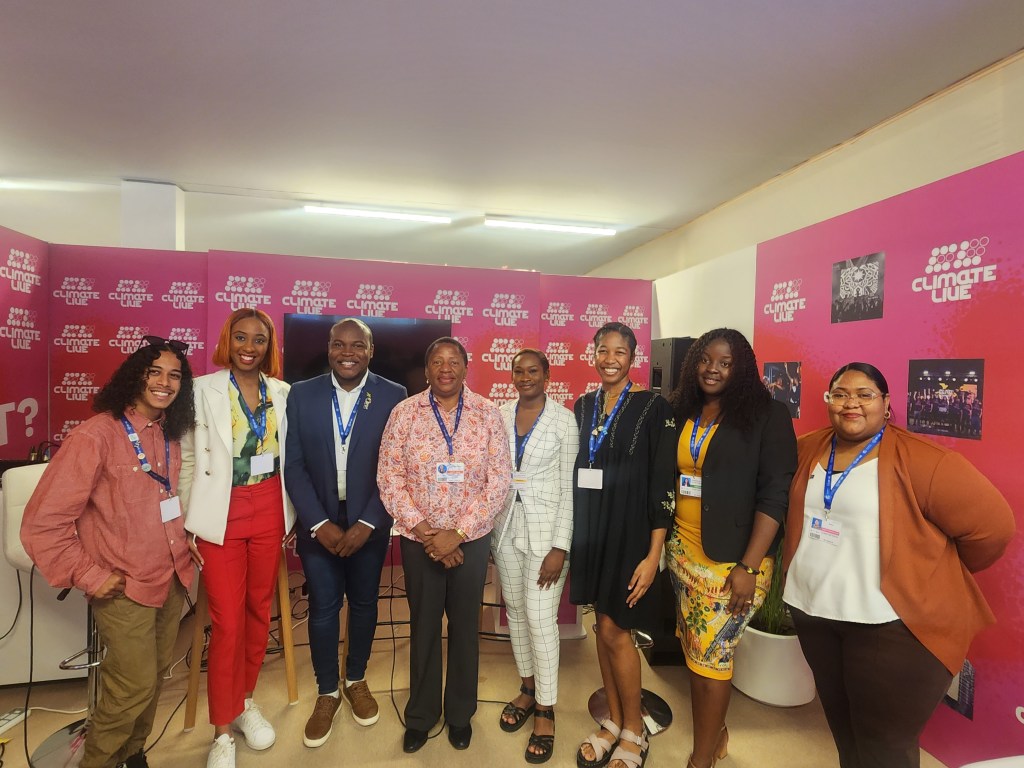
The event featured a panel of amazing Caribbean youth showcasing their expertise across various fields, such as Ashley Lashley, the CEO of the Ashley Lashley Foundation; Mario Galbert, the Interim coordinator of the Caribbean Youth Climate Council; Sweelan Renaud, Project Officer for EcoVybz Environmental Creatives; and Abia Jemuel Leonce, Project and Account Manager of Island Innovation. The importance of this panel lies in its representation of Caribbean voices and experiences, highlighting the unique perspectives and challenges faced by youth in the region. It aimed to empower Caribbean youth by showcasing role models and initiatives driving positive change. During the discussion, panellists emphasized youth’s pivotal role in shaping the Caribbean’s sustainable future. They highlighted the need for youth-led initiatives and community engagement to drive innovation and foster environmental stewardship. I am grateful to my fellow youth ambassador from Costa Rica, Francisco Lara, for stepping in to moderate the event in my absence. The panel was well received and we even had a visit from the Minister of Planning and Development of Trinidad and Tobago, The Honorable Penelope Beckles-Robinson.
Reflecting on COP28: Between Hope and Disappointment
Reflecting on my experience at COP28, I find it overwhelming and the establishment of the Loss and Damage Fund represents a significant breakthrough, reflecting decades of advocacy for greater consideration of the most vulnerable nations. Despite taking nearly 30 years to materialize, the operationalization of the fund is where several challenges arise, including questions about governance, distribution mechanisms, and insufficient funding. Negotiators at the World Climate Action Summit in Dubai demonstrated global solidarity with a decision on the world’s first ‘global stocktake’ to ramp up climate action. Even though there were commitments to the fund that exceeded USD 700 million, it remains clear that this amount needs to meet the actual needs of vulnerable nations grappling with the impacts of climate change. –
Additionally, despite the global emphasis on aligning with the 1.5 degrees Celsius temperature limit, indecisiveness prevailed. Tensions arose over the trajectory of fossil fuel use in combating climate change. Despite widespread recognition of the need to transition away from fossil fuels, particularly coal, oil, and gas, there was a notable divide in approaches. The COP28 President, Sultan Al-Jaber, faced criticism for dismissing calls for a phase-out of fossil fuels, with climate scientist Michael Mann accusing him of undermining the conference’s objectives. The final agreement’s language, whether it advocates for a “phase out” or a “phase down” of fossil fuels, remains contentious, with implications for the future of global climate action. Moreover, there’s an ongoing debate over whether the agreement should focus on “abated” fossil fuels, incorporating carbon capture and storage technologies, or “unabated” fossil fuels, which continue to emit greenhouse gases unchecked. These debates underscore the complex challenges and conflicting interests at play in addressing the climate crisis and how these decisions continue to affect SIDS.
Given the ultimate decision made by the COP presidency, SIDS is concerned that the current process does not uphold the spirit of multilateralism, as it seems that other parties received preferential treatment, compromising the transparency and inclusivity of the process. SIDS were indeed present in significant numbers at this COP, including representatives from the Caribbean; however, they still encountered challenges in amplifying their voices. In response to a ‘weak’ draft, The Alliance of Small Island States (AOSIS) Chair released a statement stating, “We will not sign our death certificate. We cannot sign on to text that does not have strong commitments on phasing out fossil fuels.”
Finding Light Amidst the Shadows
Insights, however, were not doom and gloom. Peace Boat US made a significant impact by providing a platform for youth to voice their opinions and interact with officials and influential figures. Witnessing ambassadors share transformative experiences was inspiring!
Youth involvement was also deeply moving, particularly through Island Innovation at the Caribbean Community (CARICOM) Pavilion. The stories shared by these young individuals shed light on the hardships faced by youth in SIDS, emphasizing the need for the world to understand the challenges they navigate. It’s disheartening that our talents are often exploited without proper compensation. COP28 falls somewhere in between success and failure. While there were small victories, the conference was dominated by rhetoric rather than concrete action. The urgency for a collective shift in priorities and tangible actions to secure a sustainable future for all has been highlighted.
Charting the Course Forward: Towards Sustainable Innovations
Looking ahead, my focus shifts toward sustainable innovations, particularly in biotech, with Sargassum as a key driver. My work has revolved around renewable energy, mainly bioenergy, and using sargassum to produce clean energy in biofuel and fertilizer. Now, my innovative thoughts are more focused on sustainable plastic substitutions and construction materials such as concrete infused with Sargassum. All in all, the future is bright, and I cannot wait to share all my ideas with the world and make a difference, one sustainable innovation at a time.

 ECOVYBZ