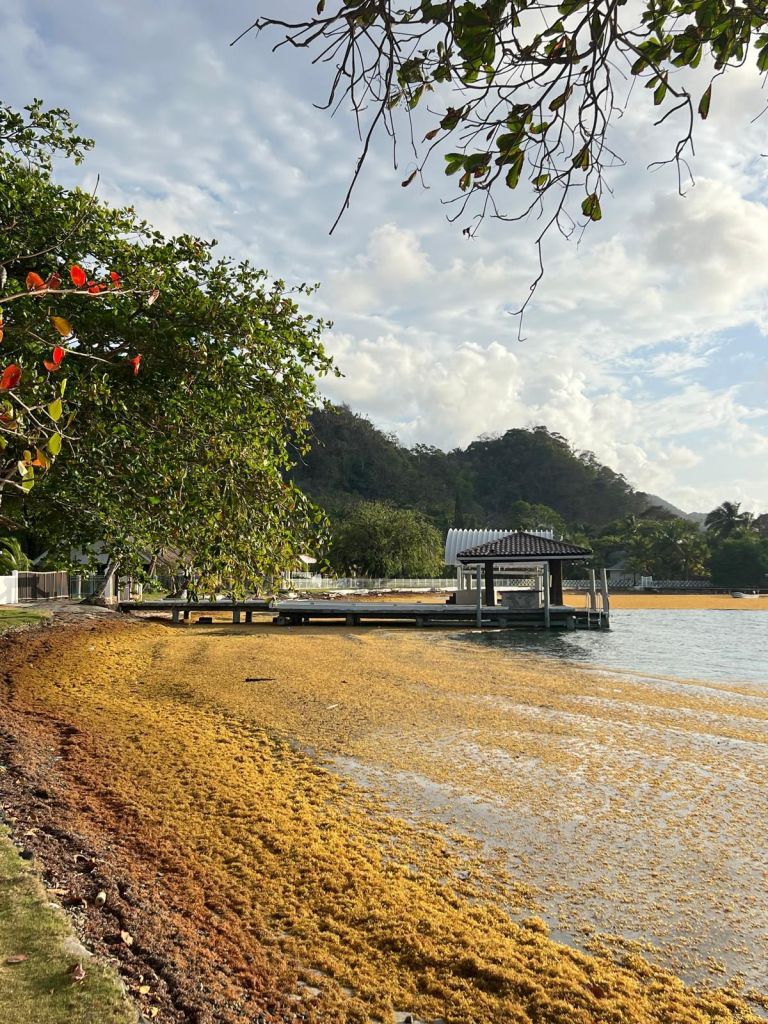
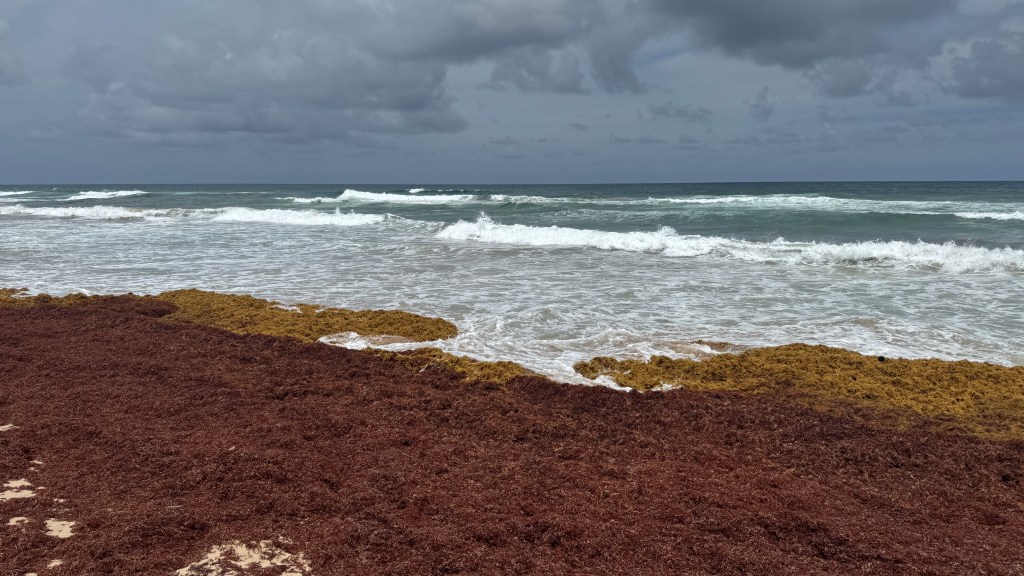
Have you ever arrived at the beach and noticed it was covered with this brown-red seaweed? This thing that covers the coast, thick brown mats of seaweed stretch along the shoreline, releasing a pungent rotten egg smell under the hot sun. A ‘nuisance’ that tourists complain about the visual impact, that fisherfolk worry about getting their boats stuck in, and local residents wonder when or if the beaches will look or smell normal again. This is the new reality of sargassum across many Caribbean shores.
Sargassum is a floating macroalgae that has existed in the Atlantic Ocean for many centuries. It plays an important ecological role offshore as a surface ecosystem where many species reside such as sea turtles, crabs, fish, and many other marine species. Historically, large amounts of Sargassum were mostly restricted to an area of the North Atlantic known as the Sargasso Sea. There, it formed floating habitats far from the shore, largely unnoticed by coastal communities.
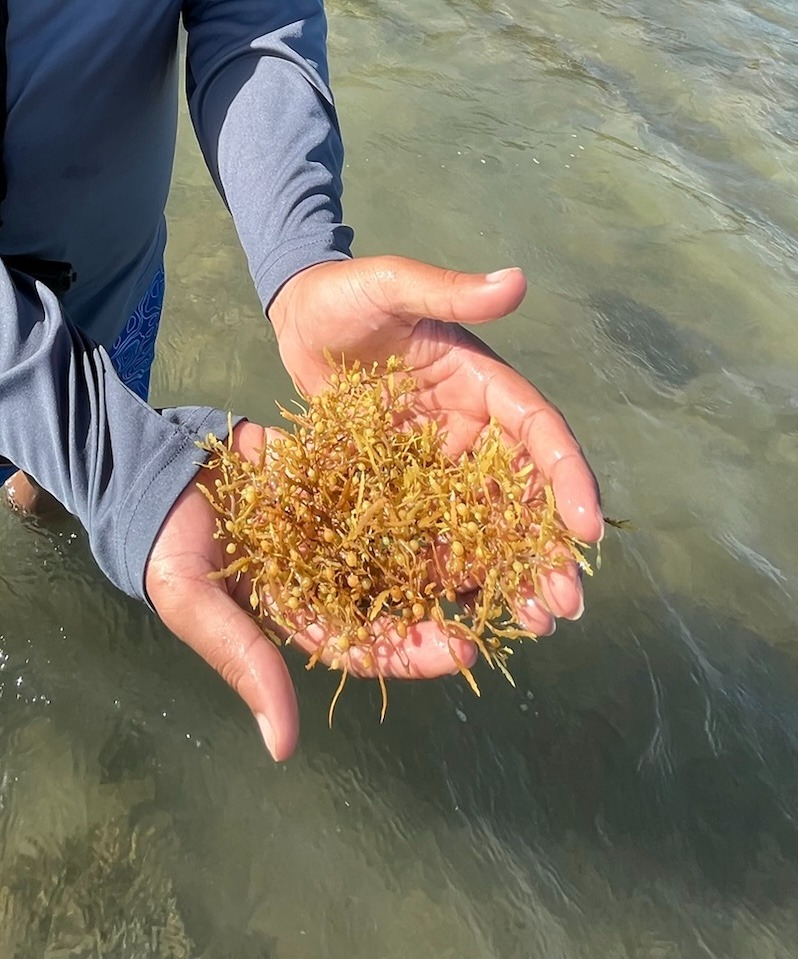
Image showing Sargassum Fluitans sp. found at Toco, Sylabia Reef: photo taken by Jannah Chin Ten Soong ( February 2026)
There are two main species that are present in the Atlantic Ocean: Sargassum fluitans and Sargassum natas. They are both holopelagic, meaning they spend their entire life cycle floating on the surface and aggregate under the influence of winds and currents to form mats. The Sargasso Sea is a golden floating rainforest that attracts a diverse assemblage of organisms. Resident species such as the Sargassum crab, Sargassum anemone, and many more, have evolved with a mutually beneficial relationship between the Sargassum & wildlife. This ecosystem is known to be one of the mostproductive regions on the planet.
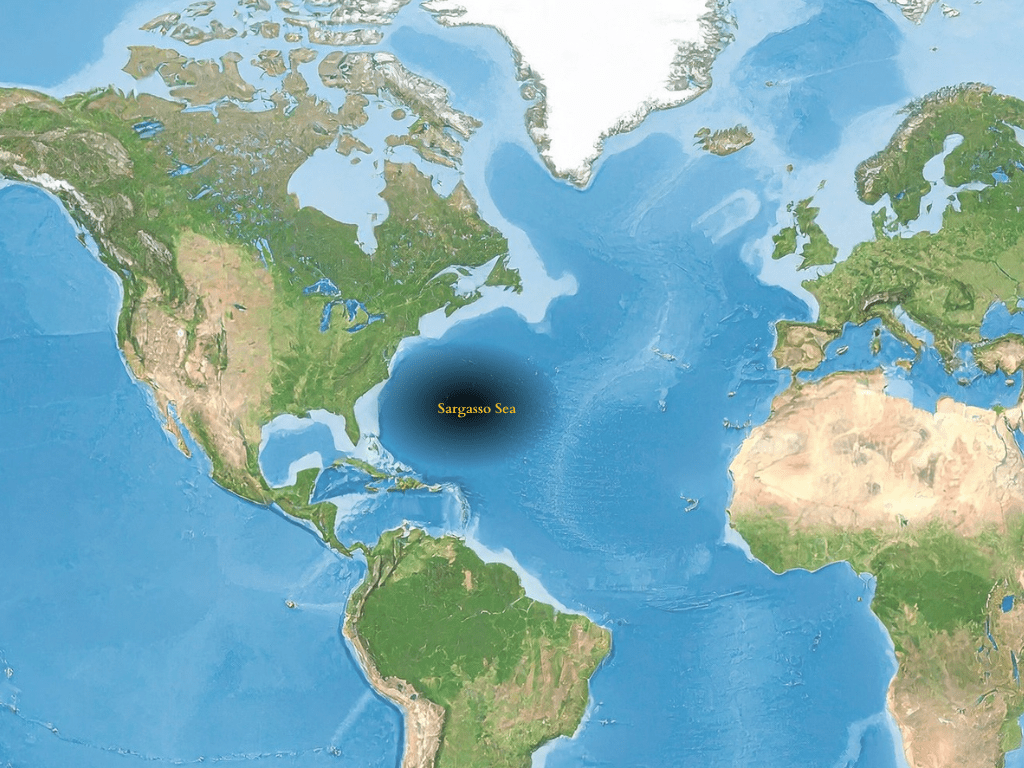
Since 2011, Sargassum has become more prevalent in the tropical Atlantic Ocean; expanding from the Gulf of Mexico (America) to the Gulf of Guinea (Africa). Small Island Developing States (SIDS) have been experiencing massive recurring influxes of Sargassum washing along their coastlines. Scientists are still trying to figure out the cause, but several key factors appear to be driving the increase.
Climate change is one of the biggest contributors. Warmer temperatures create ideal conditions for Sargassum to grow. Ocean currents and wind patterns further support growth, which can allow for large blooms to occur across the Atlantic toward the Caribbean. Another contributor is thought to be nutrient pollution. High organic material comes from the runoff from rivers such as the Orinoco River in South America. River sediment in addition to nitrogen rich fertilizers from agriculture, fuel food sources for Sargarssum mats, and supercharging growth.
In the sea, Sargassum plays an important role as a floating marine ecosystem, but when it comes onshore, accumulating on the coastlines, it becomes a serious problem. In the Caribbean, coastal communities depend on tourism. Beaches covered in dying seaweed are not aesthetically pleasing, attracting less visitors. The smell from decomposing mats caused by the release of hydrogen sulfide gas complicates the relationship with tourism. This can create a decline in guest house and hotel bookings. The local fisherfolk are also affected, as their boats can be damaged by the thick mats of sargassum on the beaches. The phenomenon based on Sargassum is a visible reminder of how interconnected our world really is.
Factors such as climate change, land-based pollution, and the change in oceanic systems aren’t isolated problems, but converge at our shorelines. The frequency and scale of current sargassum influxes tells a larger story about environmental change on a global scale. At this very moment, the golden mats are likely here to stay, at least in the near future, but the challenge is moving from problem to evolution by considering how we address the underlying causes instead of removing them. With continuous scientific research, teamwork, and sustainable management, it is possible to reduce the impacts while simultaneously preserving delicate coastal ecosystems that so many communities depend on.
As the Caribbean continues to face recurring sargassum influxes, the conversation must go beyond frustration and cleanup alone. It must also include deeper public understanding, stronger regional dialogue, and greater attention to the root causes behind this growing challenge. Understanding where sargassum comes from is an important first step in responding to it more effectively and in recognizing that what washes onto our shores is connected to wider shifts in climate, pollution, and ocean systems.This blog is part of Sargassum Sense, a regional awareness and storytelling initiative that aims to make information about sargassum more accessible, relatable, and grounded in the lived realities of Caribbean people. Through this series of blogs and other public-facing content, Sargassum Sense explores the origins, impacts, myths, and responses surrounding sargassum across the region, helping to build a more informed and engaged Caribbean public.
Author: Zaci Apparicio
Co-Author: Travis Gardiner
 ECOVYBZ