
In a world of rising seas and warming waters, the ocean is both a victim and a vital ally in the climate crisis.
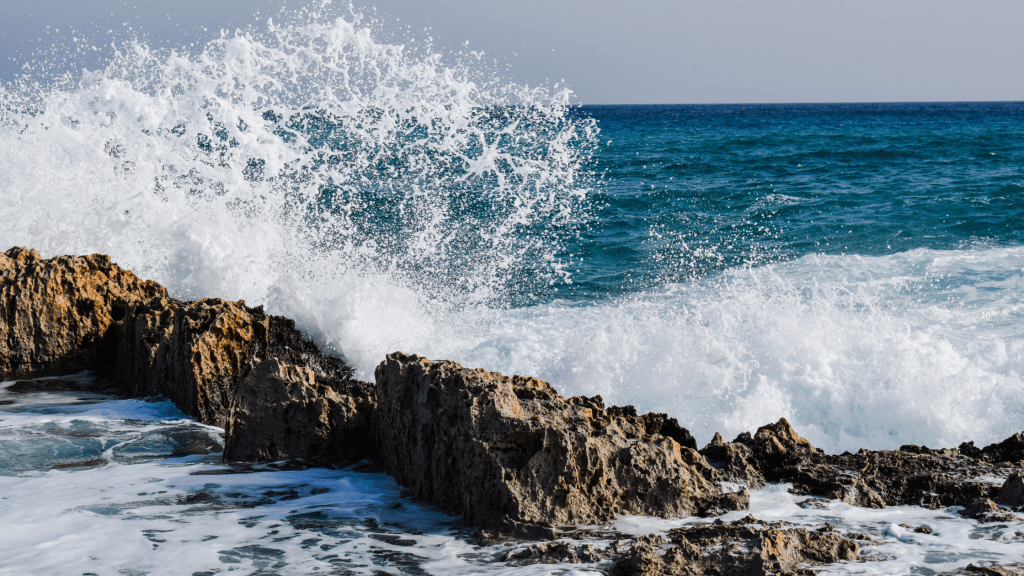
The ocean is a vastly under-explored, under-appreciated asset that protects us in ways that are sometimes beyond our own understanding. It sits at the frontline absorbing 90% of excess heat and roughly 31% of human-made carbon dioxide emissions. Other threats like pollution, ocean acidification, overfishing, invasive species, industrial activities, among others, batters the ocean’s resilience towards climate change. Complex issues may call for complex solutions, but what if everyday people could become key protectors of the big blue?
Welcome to the citizen science, ocean action and Action for Climate Empowerment (ACE) nexus where communities, data and policy drive meaningful change for our planet.
Protecting the Blue Through You
National Geographic defines citizen science as, “the practice of public participation and collaboration in scientific research to increase scientific knowledge.”
The ocean means many things to different people. Some rely on it for a source of income through fishing or tourism, others for leisure and transport, and for some it forms a significant part of their spiritual and cultural practices. Regardless of why you appreciate the ocean, this intrinsic love is typically the driver behind ocean action and advocacy. In this field, the contributions of citizen scientists are expanding the frontiers of knowledge.
In the Caribbean and Pacific SIDS, where the ocean forms a part of our identity, the grassroots engagement is especially potent. Crowdsourced observations from applications like CoastSnap, which offers citizens the opportunity to monitor changes in the shoreline due to coastal erosion using their mobile devices. With more hands in the mix, there will be an increase in frequency and consistency of data collection. Learning and applying the app’s methodology builds capacity and ensures that data standardisation is also achieved.
Data from these apps can then be fed into decisions around and strategies for environmental management. Citizen science in this context not only empowers non-scientist contributors from coastal countries, but also persons from landlocked countries by making ocean action more accessible to them through similar applications. In retrospect, the field democratises science – makes it accessible, participatory and rooted in local knowledge.
Protecting the Heart of the Climate System
While the ocean is combating climate change, climate change and other human-induced disturbances are weakening the oceans capacity to do so. To salvage what we can of its power and resources requires an “all hands-on deck” approach. All forms of ocean action – from policy implementation and enforcement, ocean literacy and education campaigns to blue carbon ecosystem restoration – are needed. The approach also needs to be multi-scalar, so that informed and inclusive decisions are made. This is how citizen science becomes a game changer, transforming passive awareness into active stewardship, and curiosity and care into conservation.
Local Action into International Recognition
Though our local ocean action may seem small in the grander scheme of things, international frameworks, like the UNFCCC-ACE, sees the contribution of this rippling effect to climate action. ACE is a term that was coined in 2015 to denote work under the United Nations Framework Convention on Climate Change (UNFCCC) and Paris Agreement. The overarching goal of ACE is to empower all members of society to engage in more meaningful climate action through its six elements – education, training, public participation, public awareness, public access to information and international cooperation. Citizen science and ocean action goals are aligned with these and together they contribute to ACE in many ways, some of which are:
1. Educating participants through outreach, literacy campaigns, art and more.
2. Enhancing public awareness of ocean and climate issues like pollution.
3. Enabling participation in research that may contribute to policy development.
4. Provide accessible data through crowdsourcing platforms.
ACE is the soft infrastructure that supports meaningful climate action not just through laws but cultural and educational change.
When It All Comes Together
For a second, imagine a community monitoring the health of a mangrove forest using an application that feeds collected data directly to an environmental agency. Using this data, they are able to develop educational campaigns, as well as report on ongoing climate adaptation and mitigation strategies. This is the nexus in action.
In Trinidad and Tobago, the Environmental Management Authority has established a platform known as ‘The ACE Space’. The goal of it is to act as a central repository for all forms of local climate action aligning with the six elements of ACE. We can all play our part as a citizen scientist and submit information on on-going projects to foster the building of linkages and collaborations. Through these submissions, a library of climate action will be established for the country. This will be used by the National ACE Focal Point as means of reporting on the landscape of climate action in Trinidad and Tobago.
Though the ocean connects us all geographically, citizen science and ACE ensures that it connects us through action.
Written by: Reyad Mohammed

 ECOVYBZ