
Hi all! My name is Hannah and I am a research officer for the Marine Resilience Initiative (MARIN) Tobago project at the Institute of Marine Affairs in Trinidad and Tobago. My passion lies in coral reef research, particularly coral restoration and being able to assist the creation of new generations of corals. I also enjoy educational outreach and introducing persons to the wonderful world of these amazing animals. I would like to extend my heartfelt thanks to Reef Futures and Ecovybz Environmental Creatives for supporting my journey to the Reef Futures Conference 2024 in Mexico.


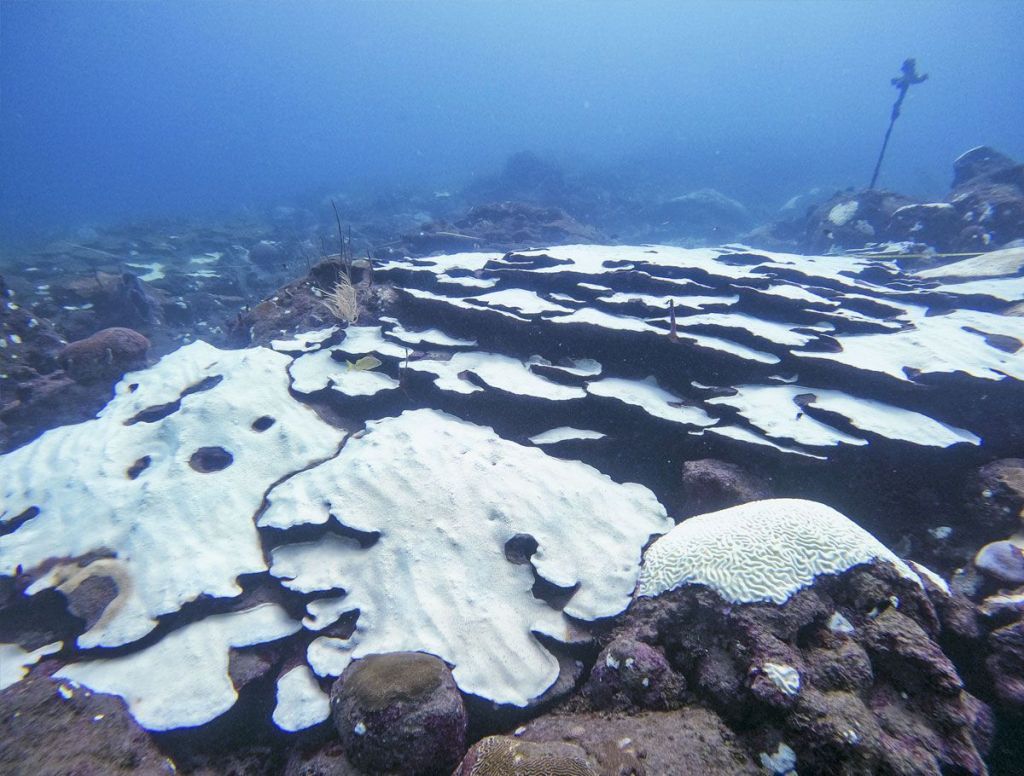
Coral reefs have high ecological, economic and cultural significance. These ecosystems support marine biodiversity, protect coastlines, sustain fisheries and drive tourism. For our own island of Tobago, a study showed that the total (direct and indirect) economic impact of reef related tourism and recreation was found to be between USD $101 to $130 million, in 2006!1 However, coming on the heels of monitoring a mass coral bleaching event in Tobago in November, I entered the Reef Futures conference fairly despondent. Constant reminders of the threats against coral reefs, visible loss of these ecosystems, having surpassed the 1.5 °C warning limit for temperature increase as well as the announcement of the fourth global mass bleaching event at the beginning of 2024, had me feeling very overwhelmed.
According to Dr. Tali Vardi, Executive Director of Coral Reef Consortium, the Reef Futures Conference 2024 felt like “a big group hug”. So right she was! Reef Futures is a one-of-a-kind conference that brings the coral world together. From researchers to marine managers to engineers to community leaders, passionate persons flocked to the conference not only describing the similar challenges they are facing, but exuding a much-needed positivity while showing many new strategies and experiments to help build the resilience of these ecosystems that are so valuable to humanity. The conference covered more than thirty key themes ranging from “Technology in restoration”, to “Assisted reproduction of corals” as well as “Advances in environmental stress experiments and genomics” to name a few. With dozens of fascinating presentations occurring simultaneously over three days of the conference, it was tough choosing which ones to attend!
These plenaries and sessions highlighted the massive amounts of research and effort going into coral reef conservation and restoration in the world today. Professor Peter Mumby from the University of Queensland provided vital insight into the future of coral reefs using models and data from the Great Barrier Reef in Australia. According to Professor Mumby, three scenarios were investigated. The first focused on the state of coral reefs if we maintain a 1.5°C warming limit. Projections indicate that stress will increase but will improve towards the end of the century and the state of reefs will be as it is now. Secondly, looking at a more likely 2°C increase, there will be a net degradation of many of the reefs towards the end of the century. Thirdly, an increase of 3°C projects significant reef degradation and an average of 5% coral cover, though some reefs may fare better or worse than the average. Curbing carbon emissions is critical to preventing this latter outcome. Professor Mumby also highlighted that in these scenarios, the “good reefs” have lower risk of bleaching severity, less impact from cyclones and high larval supply and that these factors should be used to improve strategies for coral restoration.
Many organisations around the world have recognised that some form of restoration is now necessary to maintain the health of our coral reefs. This comes in the form of coral seeding, development of ex-situ systems for corals, asexual fragmentation of existing colonies or biobanking to secure the genetic diversity of corals, to name a few.
Based on my interests, I attended sessions relating to assisted reproduction and genetics and population management and I was blown away by many of the presentations and learning what scientists and marine managers are doing to protect existing corals and attempting to ensure a future for coral reefs. For example, over the past few years, coral reproduction experts at the Caribbean Research and Management of Biodiversity (CARMABI) have refined the protocol for sperm cryopreservation. This means that coral sperm that is collected in the field can be kept alive but at really low temperatures in liquid nitrogen for many years. The idea is that with such high coral cover degradation, there will be a gene bank available to support future cross fertilisations and larval propagation. This sperm is thawed and can be used to successfully fertilise coral eggs again. At Reef Futures, Dr. Kristen Marhaver a leading scientist at CARMABI introduced the work being conducted to cryopreserve the coral larva instead of sperm. This would mean the preservation of a full coral, in its swimming state!
Another massive undertaking was described by Dr. Andrew Baker, a professor at the University of Miami, who, with his team, are working to restore reefs in Florida. Severe loss of the important species elkhorn (Acropora palmata) in Florida due to heat stress over the last few years, has resulted in them sourcing resilient elkhorn corals from Tela, Honduras. The coral colonies were shipped by air to Miami and were kept in an indoor facility at the Coral Reef Futures Lab and the Florida Aquarium. These colonies will be monitored for coral spawning and resulting corals will be grown in the lab while permits are sought for them to be placed on the reefs in Florida. Though this strategy has raised concerns over the risks associated with mixing genetics of coral colonies from different countries, Dr. Baker’s defence highlights that efforts must be made to preserve remaining stocks of elkhorn coral in Florida and these measures are becoming more drastic as climate change worsens.
Though these projects can revolutionise coral restoration, it must be acknowledged that obstacles exist including access to and scalability of these new strategies and technologies. Governmental support, global collaborations, knowledge sharing and capacity building in local communities can help bridge existing gaps. The final panel discussion at the conference poised the question, “What may reefs look like in the future?” According to climate activist, Diwi Valiente, “It is very difficult to restore reefs to what we used to see but we can stay hopeful. Go beyond simply measuring coral fragments but assess the functionality of restoration and create reefs that are future ready and fulfil a certain function.”
I also attended an informative workshop focused on “Methods for novel ex-situ Stony Coral Tissue Loss Disease (SCTLD) treatment”. SCTLD is a highly virulent, highly transmissible coral disease that has decimated coral reefs in the Caribbean region. The main cause of this disease is still being investigated but it is postulated that it is a bacterial pathogen or a combination of a virus and bacteria. It is disease affects a wide range of Caribbean species, resulting in multiple lesions on the corals with rapid tissue death. Currently, the Institute of Marine Affairs is focusing on building preparedness against coral disease in Tobago through a SPAW RAC small grant funded project. As the disease has not been recorded in Tobago as yet, it was beneficial to learn the different strategies being used to tackle the disease in other areas of the Caribbean so we can build our defence for when it does arrive to Tobago.
A major highlight was presenting my first poster at a conference. This focused on the pilot project conducted by MARIN Tobago in 2022 (funded by bpTT) which assessed the feasibility or coral reef and seagrass restoration around Tobago. This research resulted in the first “Guide to Coral Reef and Seagrass Restoration in Tobago (version 1)”. I was able to discuss Tobago’s reefs with many other scientists with backgrounds ranging from policy to biology to education. Persons were particularly interested in learning how Tobago’s reefs fared during the marine heat wave this year. It raised my spirits being able to represent our beautiful twin island. I also introduced persons to the next phase of the MARIN Tobago project where we have begun implementing these restoration strategies.


I was also fortunate to visit the ex-situ coral rearing system at National Autonomous University of Mexico/ Corallium. These scientists have been conducting pivotal research in coral sexual biology for decades and have paved the way for new researchers and organisations to learn from their successes and challenges. For those of us who are new to sexual based coral restoration, their advice is of utmost importance as we try to understand how to use their knowledge to develop best practices for successful restoration in Tobago.
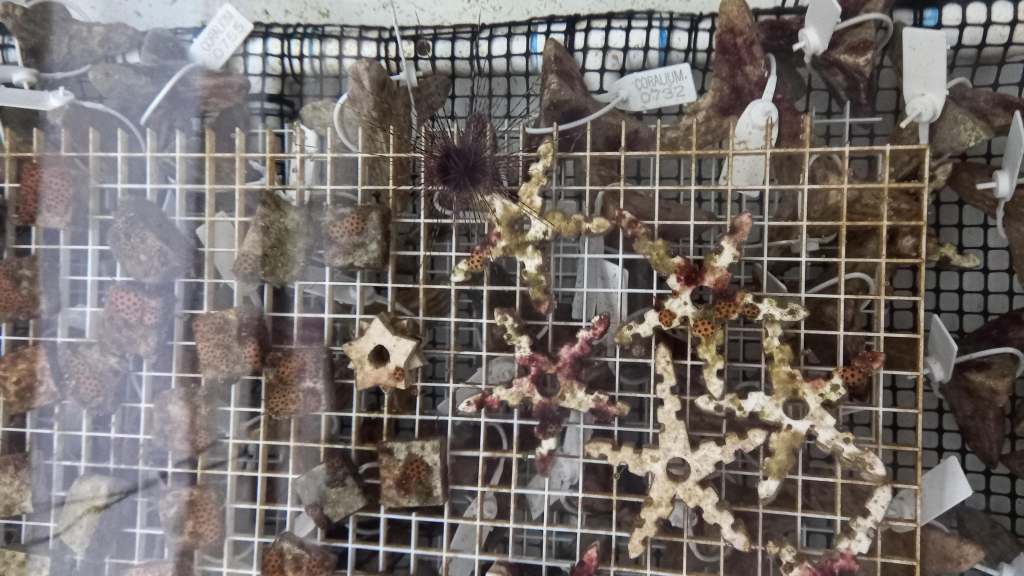
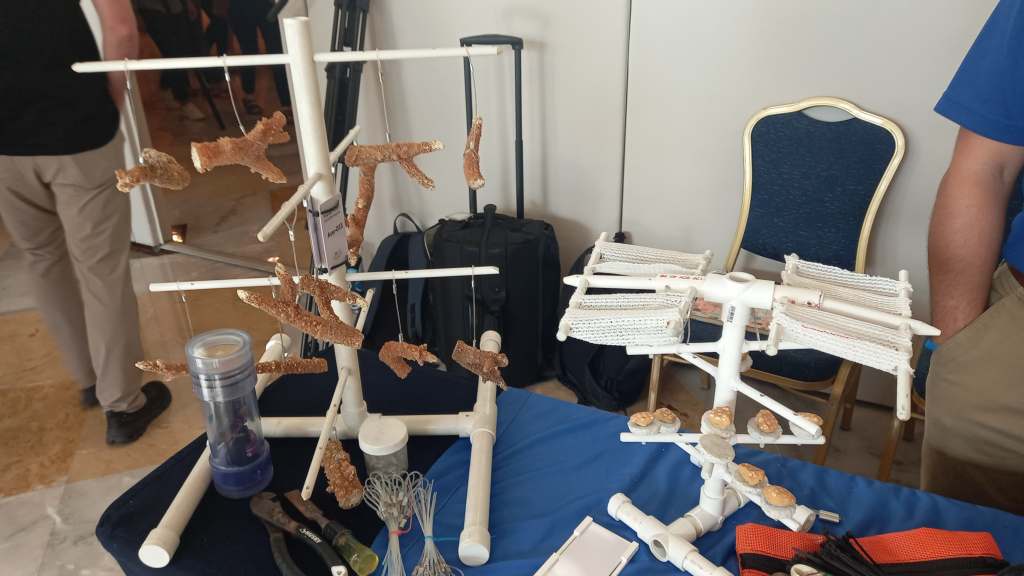
All in all, Reef Futures was a fantastic experience serving not only as a huge wakeup call but a beacon of hope in these trying times. Though there was so much information assimilate, it was exhilarating to envision the potential research and collaborations for the improvement of our own reefs in Trinidad and Tobago.
References
1. Burke, Lauretta & Greenhalgh, Suzie & Prager, Daniel & Cooper, Emily. (2008). Coastal Capital – Economic Valuation of Coral Reefs in Tobago and St. Lucia.
 ECOVYBZ