
SOUND THE ALARM —- the rainforest of the sea is under threat! Over the past few weeks, an unprecedented wave of high temperatures has struck the region. This climatic upheaval has triggered a distressing phenomenon known as coral bleaching which poses a grave threat to the delicate balance of our marine ecosystem. This is a dire situation that warrants our urgent attention!
Coral Reefs: Guardians of Our Coastlines and Economies
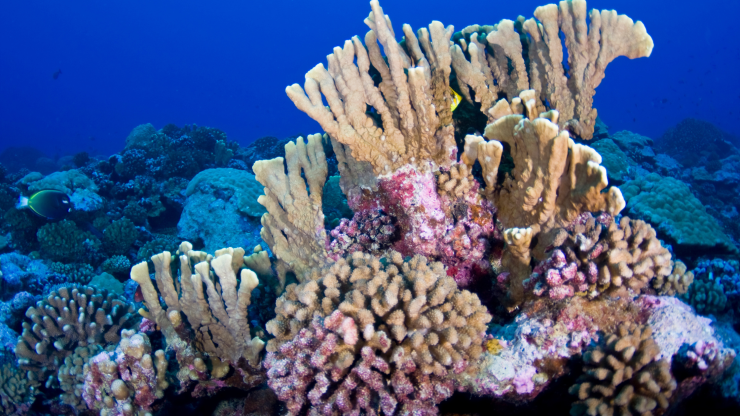
Why are coral reefs important? Well —- these underwater ecosystems serve as natural barriers, protecting coastlines from erosion and storm surges. Evidently, a 2006 coastal valuation conducted for Tobago revealed that coral reefs safeguarded approximately 50% of the coastline. (Burke et al 2008). Beyond their ecological significance, they are vital for the nation’s economy and food security at the time generating 0.7 – 1.1 million USD in revenue from fishing activities linked to coral reefs (Burke et al 2008). They support a diverse array of marine life, including fish species crucial for local fisheries that contribute to the livelihoods of coastal communities. Additionally, the vibrant reefs are a major draw for tourism, boosting the nation’s economy. According to the study, both direct and indirect tourism contributions measured between 101 – 130 million USD (Burke et al 2008). Therefore, these reefs are not just an environmental imperative but also a matter of economic and social well-being.

Crisis in the Ocean: Coral Bleaching Unveiled
Unlike plants, corals are not autotrophic beings which simply means that they do not make their own food. Consequently, corals engage in a symbiotic dance with a photosynthetic microalgae called zooxanthellae which provide them with food and their vibrant colour. In turn, the corals themselves provide a home for the algae. When temperatures soar to extreme levels, the once-harmonious relationship between coral and zooxanthellae breaks down. The corals expel these essential algae from their tissue, leaving them pale and vulnerable. This alarming phenomenon, known as coral bleaching, spells disaster for the corals and the entire ecosystem they support. (Berkelmans and van Oppen 2006)
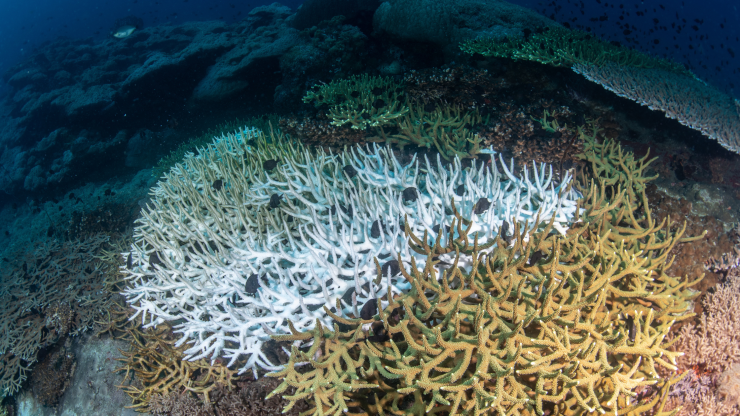
The Culprit: Unprecedented High Temperatures
As someone said on social media recently; Together we Perspire, Together we need Breeze! LITERALLY, because this is no joke, it RELLLLLLLLLLLLLLL HOT these days!
On a serious note, Trinidad and Tobago have sweltered under an oppressive blanket of heat, making the past few weeks unbearably hot. Just recently, the Trinidad and Tobago Meteorological Service (TTMS) issued a hot spell warning yellow level alert on Friday 15th (warning now discontinued). We are in what is called the heat season which runs from May to October, with September experiencing the fieriest days (TTMS 2023). This disturbing trend seems to be the new norm, with record temperatures soaring to a blistering 35.4 degrees Celsius on September 17th as the hottest day recorded for 2023 in Trinidad while it was 33.6 degrees Celsius in Tobago on August 11th (Hosein 2023).
El Niño and Climate Change: A Deadly Duo
The key climatic condition working towards this recipe of what currently feels like hell on earth is a phenomenon called El Niño typically occurring every 2 to 7 years. Due to a weakening of trade winds that blow from east to west, there is a reduction of upwelling which is responsible for bringing cold, nutrient-rich waters from deeper depths to the surface (NOAA 2023). This causes a large mass of warm water to accumulate in the Pacific Ocean. Due to the lack of trade winds, this surplus of warm water spills over into the Atlantic Ocean, Gulf of Mexico, and the Caribbean, leading to elevated Sea Surface Temperatures (SST) (Alberts 2023). There is more than a 95% chance that El Niño will occur from January to March 2024 (Reuters 2023) This event coupled with the effects of climate change can be catastrophic for our reefs.
Crisis Alert: Coral Bleaching Watch
In August 2023, the National Oceanic and Atmospheric Administration (NOAA) issued a coral bleaching watch for the Caribbean. Currently, Trinidad and Tobago are officially at ‘coral bleaching alert level 2’ (NOAA 2023). Unfortunately, this is not the first bleaching incident to occur. Tobago’s reefs have previously undergone major mass bleaching events in the years 2005 and 2010 with little recovery having 66% and up to 100% of reef-building species in some sites bleached respectively alongside 80% mortality recorded for 2010. (Ganase and Lochan 2022). As you can explicitly see, our reefs have and are currently facing pressha!
“IMA has been monitoring the coral bleaching alerts from NOAA’s Coral Reef Watch. We are currently at an Alert Level 2, which is projected to continue for the next three months. We share these updates with our partners and record persons’ reports of coral bleaching sightings via the IMA SeaiTT App. The IMA team will also conduct bleaching assessments later this year.”
— Hannah Lochan, Research Officer at the Institute of Marine Affairs (IMA).

Hope on the Horizon: Conservation and Restoration
Though it can seem discouraging as events such as El Niño are inevitable, there are notable conservation efforts that seek to build coral reef resilience in our coastal waters such as those from non-profit organizations at the Environmental Research Institute Charlotteville (ERIC) and state entity, the IMA. More specifically, ERIC is working to restore coral reefs in Tobago and has established coral nurseries where they grow coral fragments and then transplant them to damaged reefs. ERIC also works with the local community to educate them about the importance of coral reefs and to promote sustainable fishing practices (ERIC n.d.). Furthermore, the IMA have recently completed their 18-month pilot phase project called the Marine Resilience Initiative (MARIN) in Tobago to determine the feasibility of coral and seagrass restoration given their current ecological state, existing disturbances and management practices. Due to the pilot’s success, IMA will be supported by a 1 million USD grant from British Petroleum (bp) to further their work for the next 5 years (IMA 2023).
An Urgent Call to Protect Our Coral Reefs
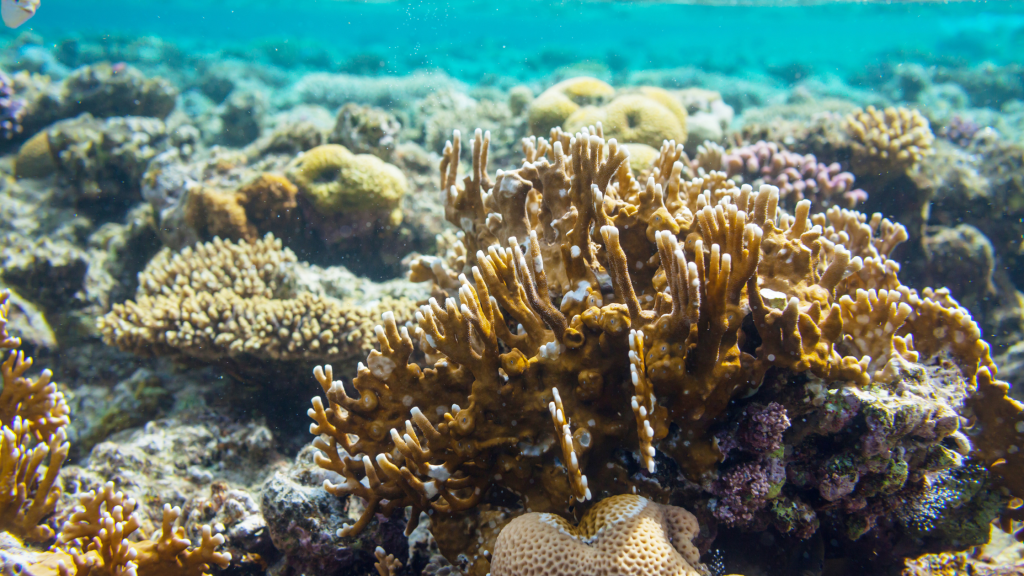
Though coral reefs are fragile, they are intricate ecosystems teeming with vibrant marine life. These underwater wonders are far more than just picturesque attractions; they are the unsung heroes of our coastal communities. In the midst of this looming crisis, let us recognize the urgency of the situation and join hands to protect our reefs. Reach out to the IMA to report coral bleaching @incidents@ima.gov.tt or through their SeaiTT app.

Written by: Sweelan Renaud
References
Alberts, Elizabeth C., Jayne Jenkins, and Rebecca Kessler. 2023. “An El Niño is forecast for 2023. How much coral will bleach this time?” Mongabay. https://news.mongabay.com/2023/02/an-el-nino-is-forecast-for-2023-how-much-coral-will-bleach-this-time/.
Berkelmans, Ray, and Madeleine J. van Oppen. 2006. “The role of zooxanthellae in the thermal tolerance of corals: a ‘nugget of hope’ for coral reefs in an era of climate change.” Proceedings of the Royal Society B: Biological Sciences 273 (1599): 2305-2312. https://doi.org/10.1098/rspb.2006.3567.
Burke, Lauretta, Suzie Greenhalgh, Daniel Prager, and Emily Cooper. 2008. “Front three should be 2-3 pages, if possible.” World Resources Report. http://pdf.wri.org/coastal_capital.pdf.
Environmental Research Institute Charlotteville. n.d. “ERIC Tobago Research Institute Coral Reef Monitoring.” Environmental Research Institute Charlotteville. Accessed September 20, 2023. https://www.eric-tobago.org/coral-reefs.html.
Ganase, Anjani, and Hannah Lochan. 2022. “THE STATUS OF CORAL REEFS IN TOBAGO, 2020.” Institute of Marine Affairs. https://www.ima.gov.tt/wp-content/uploads/2023/09/Status-of-Coral-Reef-of-Tobago-2020-Ganase-Lochan-2023.pdf.
Hosein, Kalain. 2023. “Heat Records Fall For 2023 As Scorching Temperatures Continue Across T&T.” Trinidad and Tobago Weather Center. https://ttweathercenter.com/2023/09/19/heat-records-fall-for-2023-as-scorching-temperatures-continue-across-tt/.
Institute of Marine Affairs. 2023. “The restoration journey continues, Project MARIN proceeds for another five years. – IMA.” Institute of Marine Affairs. https://www.ima.gov.tt/2023/09/11/the-restoration-journey-continues-project-marin-proceeds-for-another-five-years/.
National Oceanic and Atmospheric Administration. 2023. “Trinidad and Tobago Regional Products 2023-09-07.” NOAA Coral Reef Watch. https://coralreefwatch.noaa.gov/product/vs/gauges/trinidad_tobago.php.
National Oceanic and Atmospheric Administration. 2023. “What are El Nino and La Nina?” National Ocean Service. https://oceanservice.noaa.gov/facts/ninonina.html.
Patel, Brijesh, Seher Dareen, Rahul Paswan, and Sharon Singleton. 2023. “Over 95% chance of El Nino conditions from January to March 2024, US forecaster says.” Reuters. https://www.reuters.com/business/environment/el-nio-conditions-continue-through-winter-us-forecaster-2023-09-14/.
Trinidad and Tobago Meteorological Service. 2023. “Public Warning.” Trinidad & Tobago Meteorological Service. https://www.metoffice.gov.tt/early_warning.
 ECOVYBZ